
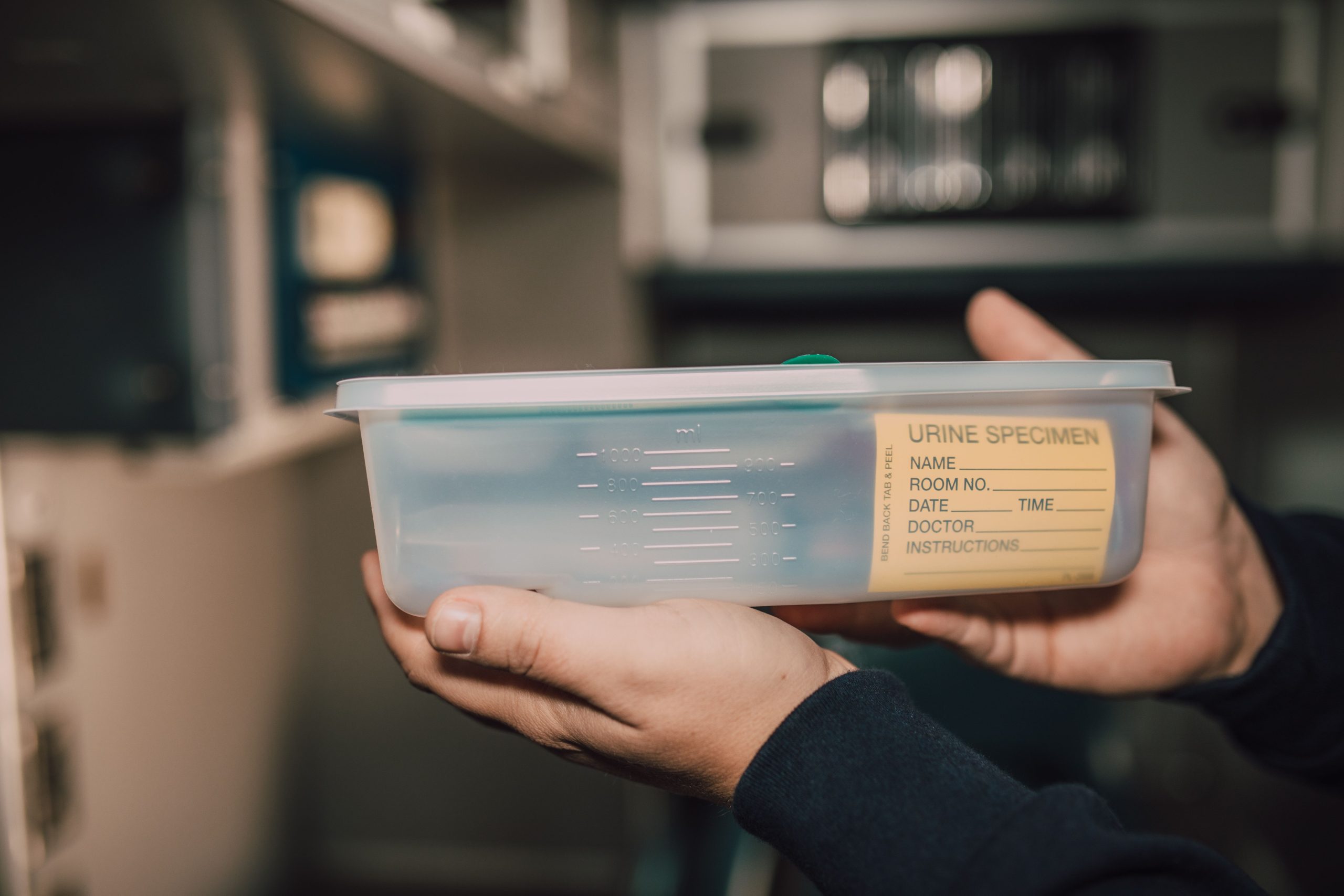
Most men who notice pink or rust-colored urine do the same thing: they drink more water, wait a day, and feel relieved when it clears. That relief is the problem. Painless blood in the urine – hematuria – is the single most common first sign of bladder and urothelial cancer, and it is notorious for coming and going. One episode, then six clean weeks, then another episode. The tumor does not disappear in between; it just stops bleeding for a while.
Bladder cancer is one of the more common cancers in men worldwide, and it is one of the most treatable when caught while it is still confined to the inner lining of the bladder. The gap between an early diagnosis and a late one is often measured in months of delay, not in the aggressiveness of the disease. Here is what the symptom actually means, who should take it most seriously, and what a proper work-up looks like.
What hematuria is – and is not

Blood in urine comes in two forms. Gross hematuria is visible: tea-colored, pink, or frankly red urine, sometimes with small clots. Microscopic hematuria shows up only on a lab dipstick or microscope, often as an incidental finding during a routine check-up or pre-employment screening – a common scenario in the UAE, where annual medical testing is widespread.
Plenty of benign causes exist: urinary tract infection, kidney stones, recent vigorous exercise, an enlarged prostate, certain medications, even beetroot. The clinical rule of thumb that matters is this: visible blood in the urine in an adult over 40, especially a current or former smoker, deserves evaluation by a urologist even if it resolves on its own and even if a course of antibiotics made things feel better. Infection and cancer can coexist. Treating one does not rule out the other.
Other symptoms worth a conversation
- Urinating much more often than usual, without a clear cause
- A burning or urgent sensation that persists after infection has been treated
- Feeling the need to go but passing very little
- Lower back or flank pain on one side
- Unexplained weight loss or persistent fatigue
Who carries the most risk

A clinician can help assess how personal risk factors affect the next steps.
Smoking is the dominant risk factor for urothelial cancer – the chemicals in tobacco are filtered through the kidneys and sit in contact with the bladder lining every time urine is stored. Risk rises with pack-years and falls after quitting, though it never returns fully to that of a lifelong non-smoker. Occupational exposure matters too: aromatic amines and related compounds used historically in dye, rubber, paint, leather, and some chemical and industrial settings are established contributors, and the latency can run for decades. Men are diagnosed considerably more often than women, and incidence climbs sharply after age 55.
Chronic bladder irritation – long-term catheter use, recurrent infections, or a history of certain parasitic infections acquired abroad – also raises risk, sometimes for a different tissue type of bladder cancer. Prior pelvic radiotherapy and some chemotherapy agents are recognized factors as well. None of these guarantees disease, and most people with risk factors never develop bladder cancer; the point is to lower the threshold for investigating symptoms rather than to live in fear of them.
What a real work-up involves

Ask your urologist what each test is intended to clarify.
A credible evaluation for hematuria is not a single test. It usually combines:
- Urinalysis and urine culture to confirm blood and exclude infection.
- Urine cytology or marker testing, looking for abnormal cells shed into the urine.
- Cross-sectional imaging, typically a CT urogram, which shows the kidneys, ureters, and bladder; the upper urinary tract uses the same lining tissue as the bladder and can harbor tumors too.
- Cystoscopy – a thin flexible camera passed into the bladder. It remains the reference standard, because small flat lesions can be invisible on imaging.
- Biopsy or transurethral resection if something is found, to establish grade and depth of invasion.
That last step drives everything else. Roughly three-quarters of bladder cancers are non-muscle-invasive at diagnosis, meaning they are limited to the superficial layers. These are typically managed by resection through the urethra plus medication instilled directly into the bladder, then kept under surveillance with repeat cystoscopy, since recurrence is common. Muscle-invasive disease is a different problem, calling for a decision between radical surgery and a bladder-preserving approach combining chemotherapy with radiotherapy, often with immunotherapy in the mix for selected patients.
Trade-offs patients should actually ask about
The honest conversation in bladder cancer is rarely “cure versus no cure.” It is about function, surveillance burden, and long-term side effects. Removing the bladder is highly effective but reshapes urinary function permanently. Bladder preservation protects anatomy but demands rigorous follow-up and carries its own risks. Radiotherapy to the pelvis can affect bowel and urinary tissue over years, which is why modern planning works so hard on precision – a principle demonstrated elsewhere in oncology by research showing that radiation delivered near the heart raises later cardiovascular risk. Dose, direction, and the organs sitting nearby genuinely matter, and they are fair questions to put to a radiation oncologist before treatment starts.
Ask, too, how your case will be reviewed. Cancer care has moved away from single-specialist decisions toward multidisciplinary review, where a urologist, medical oncologist, radiation oncologist, radiologist, and pathologist assess the same case together. Understanding what each stage involves, from the first appointment through treatment and follow-up, makes the process far less disorienting; a clear picture of the path from consultation to recovery helps patients prepare questions instead of reacting to news.
Where to take the symptom in the UAE
A coordinated urology service can bring diagnostic tests and specialist review together.
If you are in the Emirates and have had even one episode of visible blood in the urine, the practical move is a referral to a urology service that can run cystoscopy, dedicated imaging, and pathology under one roof rather than across three appointments in three places. Cleveland Clinic Abu Dhabi, which works in collaboration with Cleveland Clinic in the US, runs its Genitourinary Cancer Program within its Cancer Institute, covering bladder and urothelial cancer alongside prostate and testicular cancer care, with specialized diagnostic imaging, pathology, and multidisciplinary tumor board case review – the kind of structure readers comparing Top bladder cancer treatment centers in the region will want to look for, and a reasonable starting point for patients traveling from Dubai or from outside the UAE.
The practical takeaway
Treat one episode of painless blood in the urine as a reason to book an appointment, not a reason to wait for a second episode. Tell the doctor about smoking history and any industrial or chemical exposure, even from decades ago – it changes how seriously the finding is weighed. If you are given antibiotics and the blood clears, still push for the urology review. And if a scan comes back clean but symptoms persist, ask specifically whether cystoscopy has been done, because imaging alone misses flat lesions. Early bladder cancer is one of oncology’s better stories, but only for the men who get looked at while it is still early.